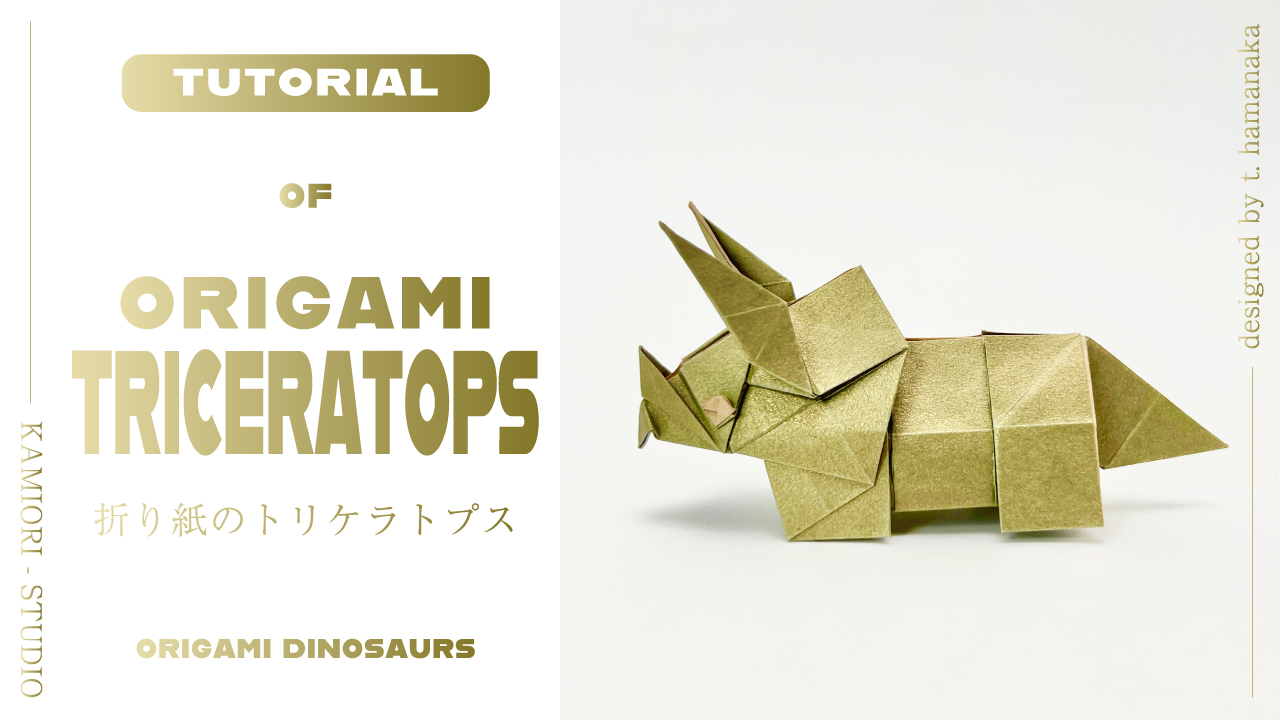

When expressing animal horns, spikes, or sharp pointed forms in origami, it is important not only to achieve a sharp silhouette, but also to give the form convincing three-dimensional presence. Creating shapes that are not merely thin and pointed, but that clearly occupy space, greatly enhances the overall quality of a piece.
At Kamiori-Studio, we frequently use a polygonal component called the “Acute Triangular Pyramid” to achieve this kind of expression. In this article, we explain this structure, which is especially well suited for horn-like forms.
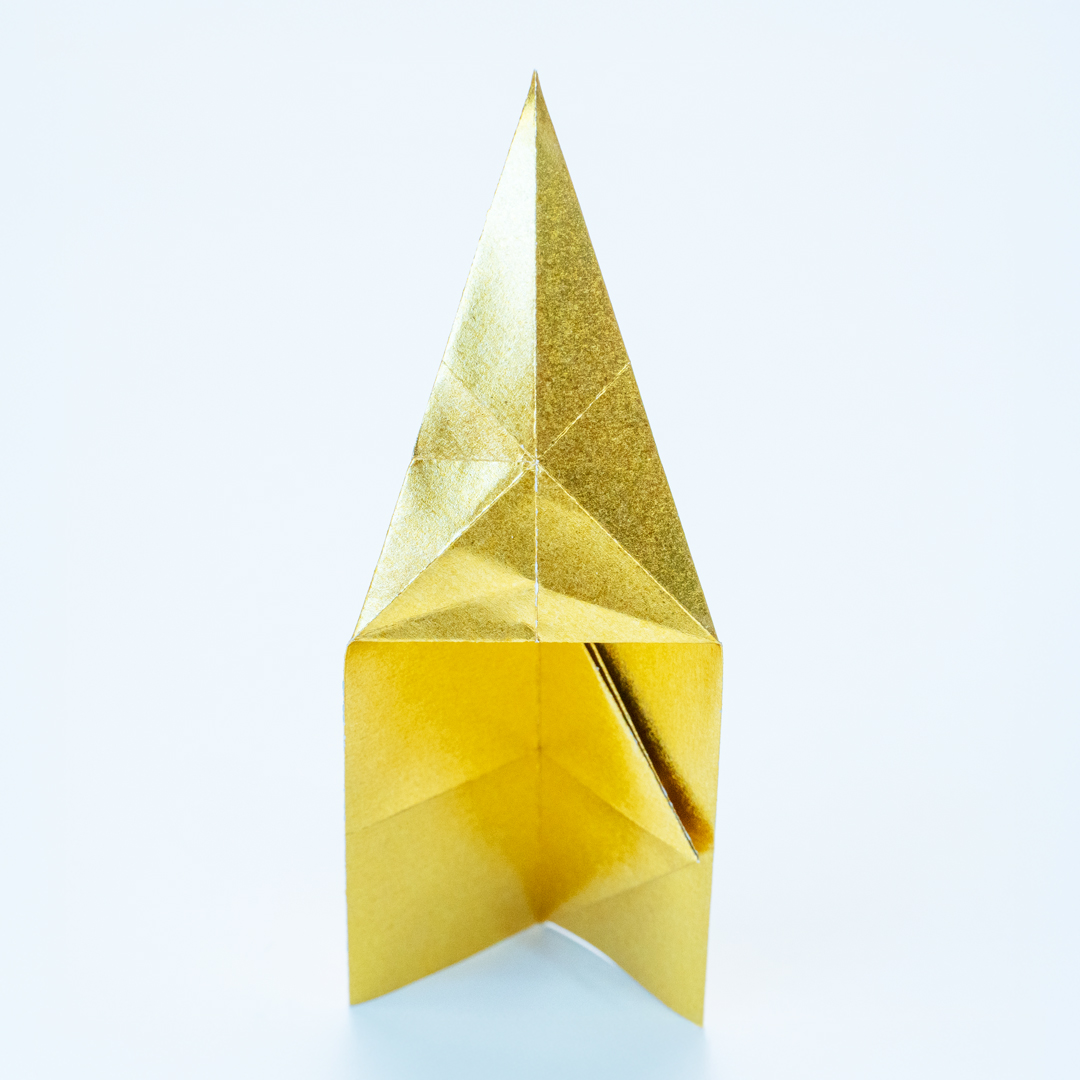
Acute triangular pyramid
A slender triangular pyramid with a sharply elongated apex, offering strong structural stability. On its own, it is well suited for creating horn-like forms. By combining multiple units, it can be extended into solid structures such as cubes and square pyramids, making it a highly versatile structural element.
What Is the Acute Triangular Pyramid ?
The acute triangular pyramid is a polygon component that is well suited for representing animal horns and protrusions.
A defining feature of this structure is that it can be folded out from the vertex of the paper—the so-called “corner kado.”
Corners folded from the vertex of the paper have several important properties:
- They naturally taper toward the tip
- They create a strong sense of volume using very little paper area
- They produce a structurally sharp and focused impression
Because of these characteristics, this corner placement is extremely compatible with motifs such as horns, fangs, and spikes.
What Is a “Corner-Kado”?
A corner-kado refers to any corner folded out from the corner of the paper, using a 90-degree region. As a result:
- The available paper width decreases as the fold progresses
- The form naturally converges into a thinner tip
Compared to corners folded from the interior of the paper (internal corners), corner-kado structures offer a major structural advantage: they make it much easier to form sharp, tapered tips.
Paper Efficiency as a Structural Advantage
One of the most important features of corner-based structures is their exceptional efficiency in paper usage.
- Compared to corners folded from the interior of the paper
- A corner-kado can be formed using approximately one-third of the paper area
This difference comes from the amount of paper region structurally required to generate the corner.
A Concrete Example
Using the classic origami crane as an example:
- The head
- The tail
- The wings
All of these are constructed using corner-kado structures.
The reason the crane can maintain such slender, lightweight forms with minimal paper is precisely because of the efficiency of this corner-based structure.
Acute Triangular Pyramid Created Through Accordion Folding
The acute triangular pyramid can be formed by folding the paper corner in an accordion (zigzag) pattern, then converting it into a three-dimensional fold.
This structure has several key properties:
- It can be repeated
- Its length and thickness are easy to control
- The rhythm of the folds directly becomes part of the structure
Because of this, it is a highly versatile and expandable structural element.
In addition, its structural strength is relatively high, allowing the volumetric corner to stand naturally as a three-dimensional form without collapsing.
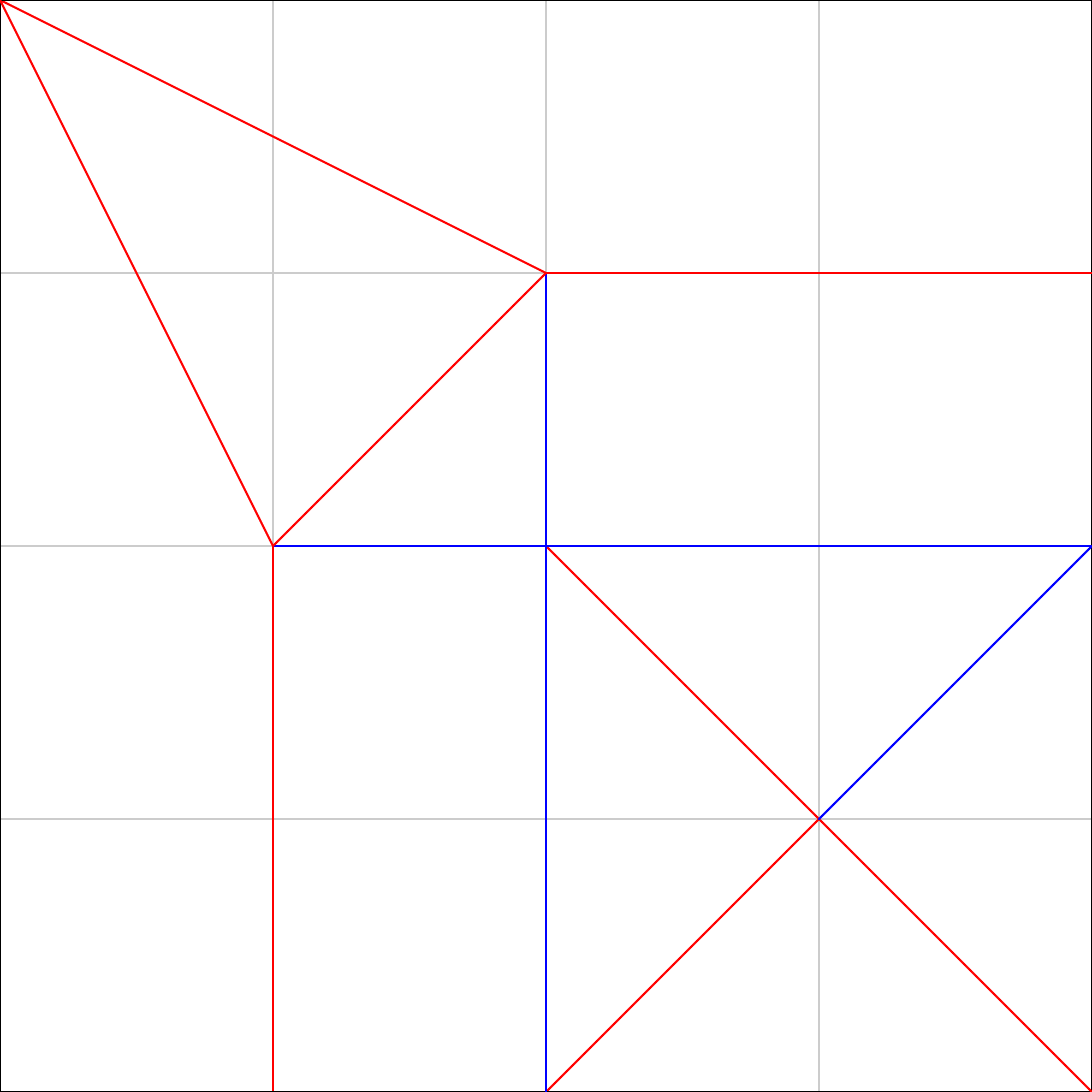
This makes it especially effective when:
- Working with band-like folded sections
- Adding volume and physical presence to a form
In such cases, the acute triangular pyramid functions as a reliable method for three-dimensionalizing paper without forcing it.
Geometric Extensions of the Acute Triangular Pyramid
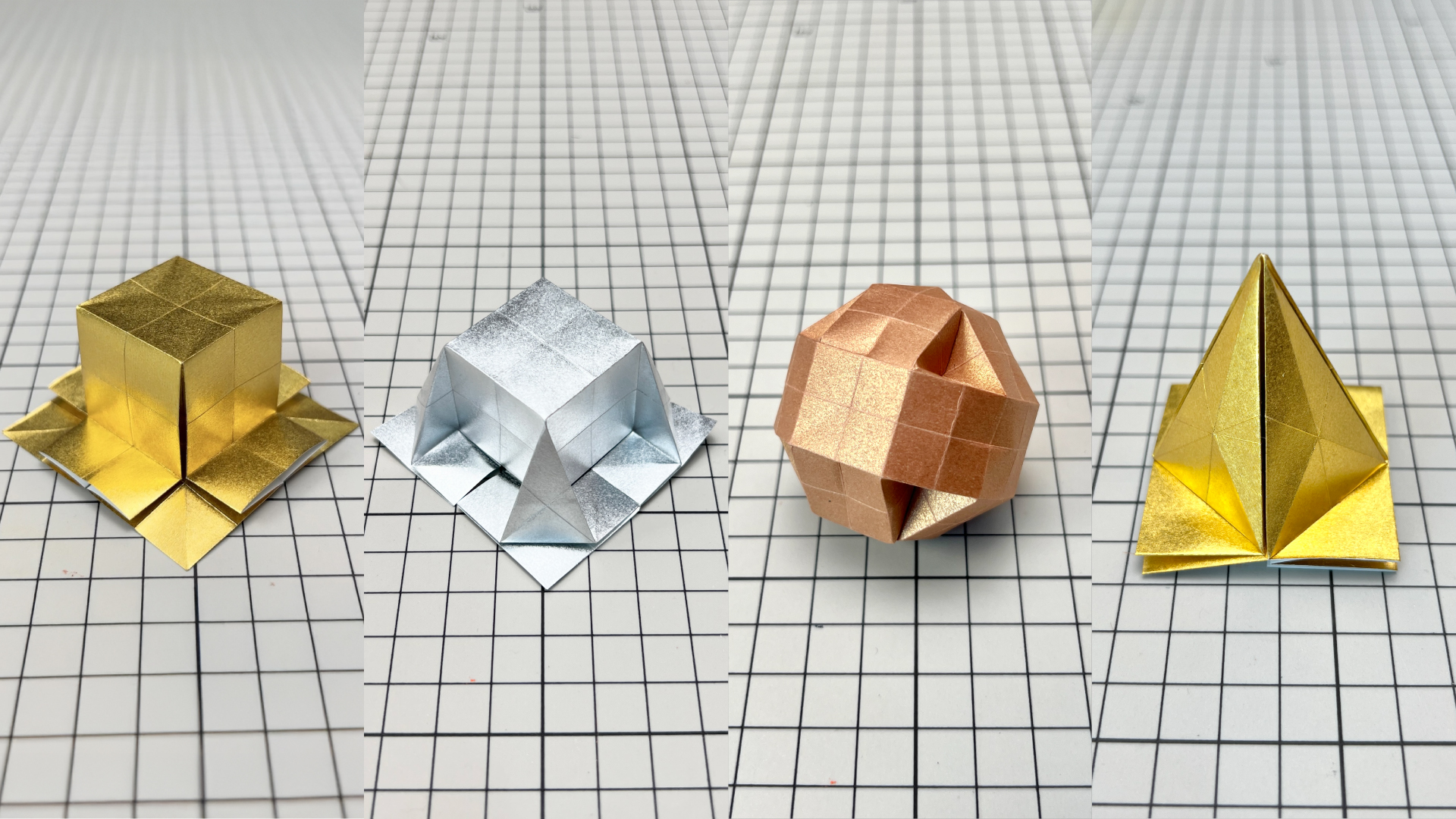
The acute triangular pyramid is not limited to standalone use. By combining multiple units, it can be extended into entirely different structures.
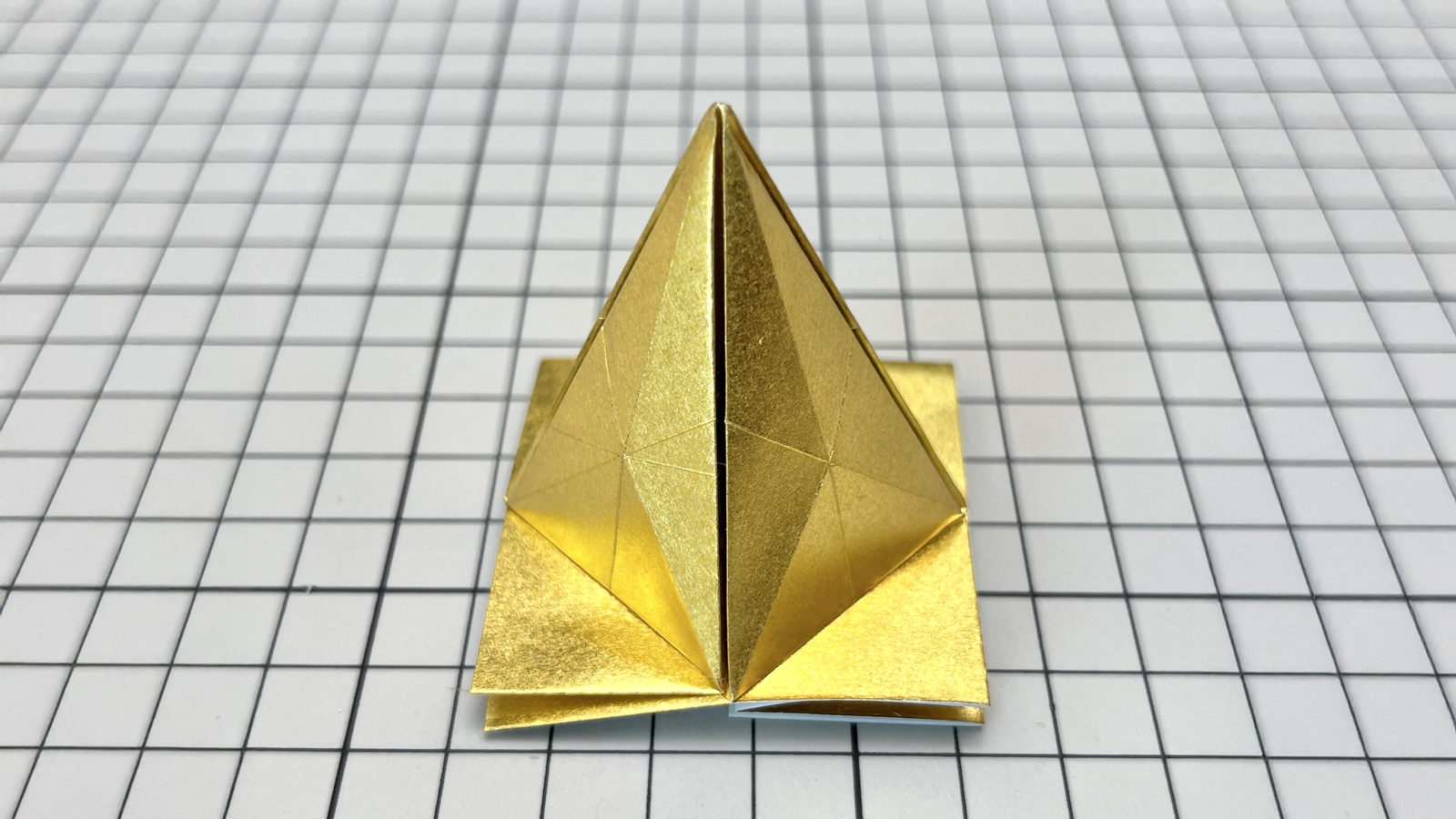
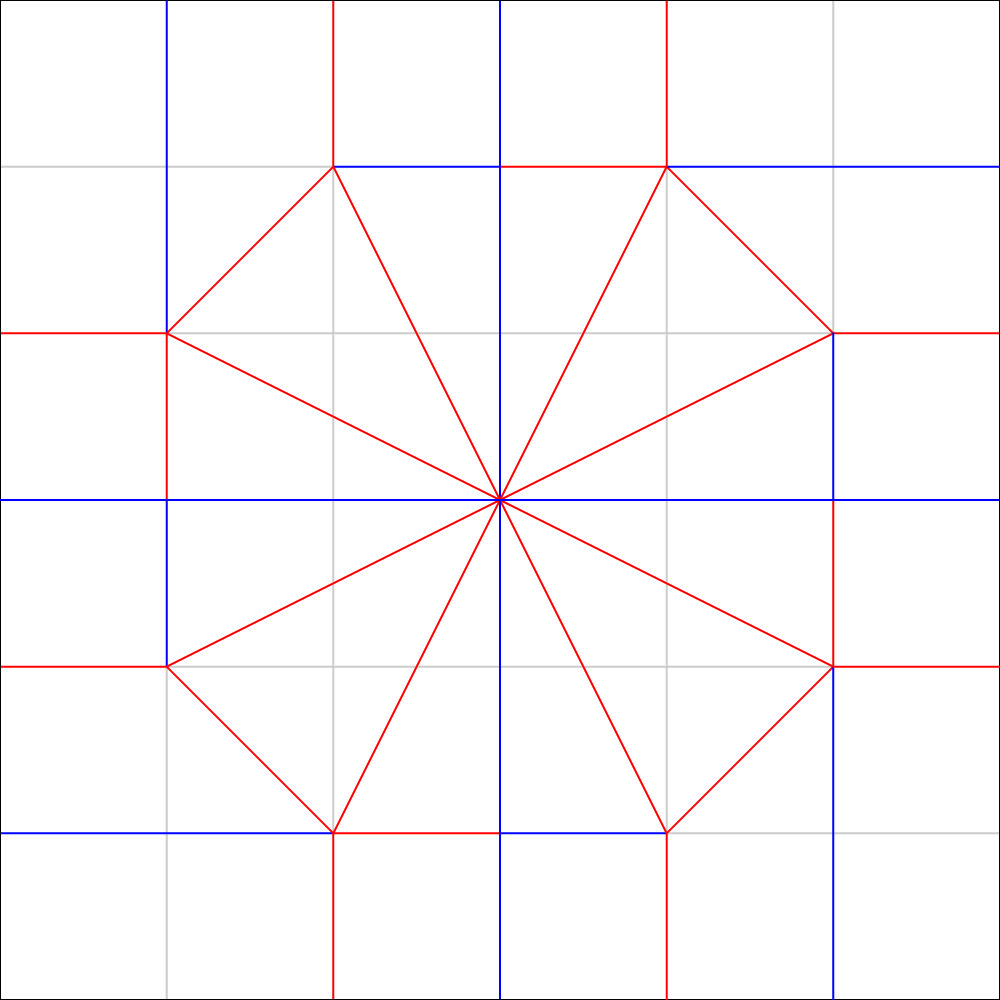
Composite Square Pyramid
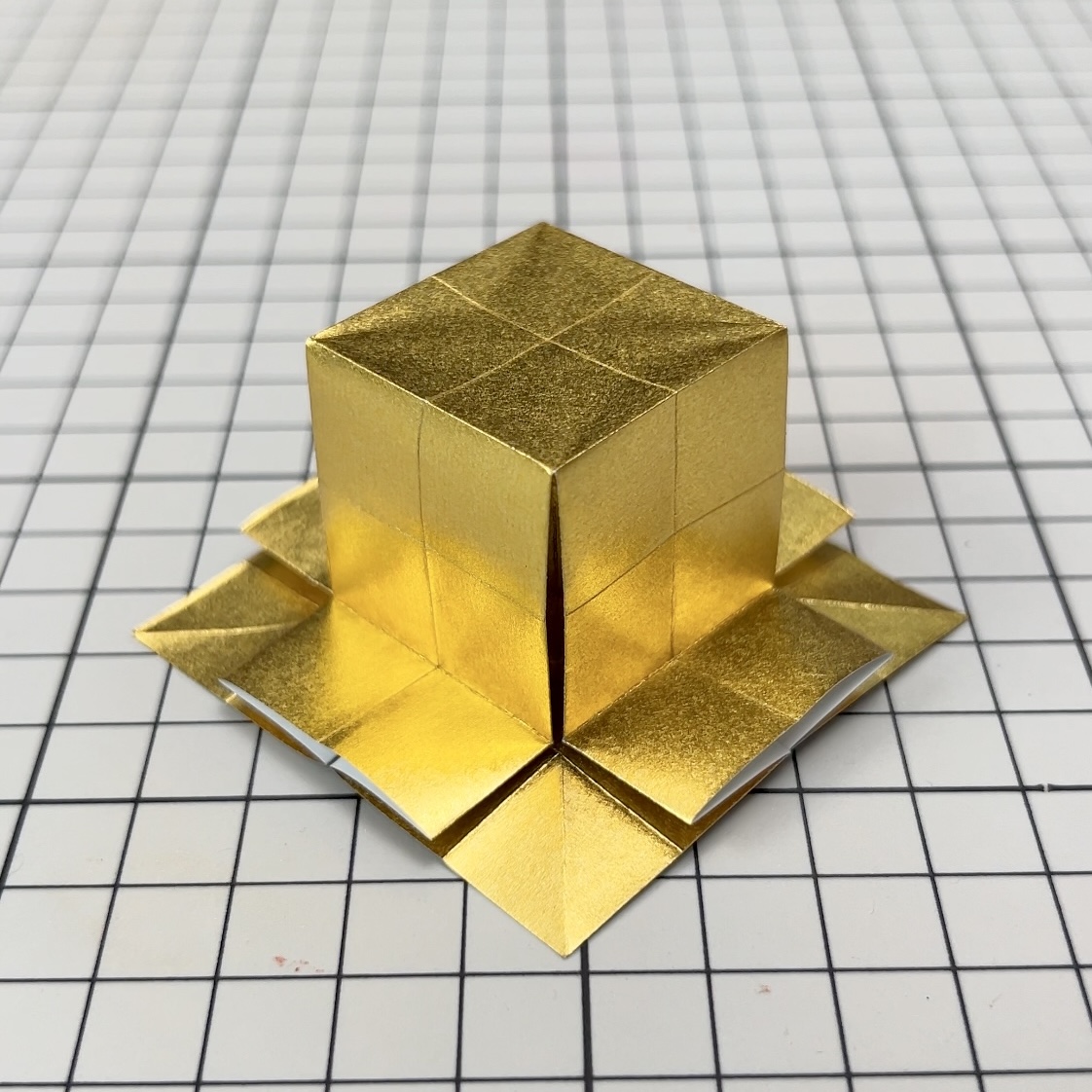
Basic Cube
The fundamental cube form. A basic structure for understanding the relationship between faces and corners.
Basic Cube
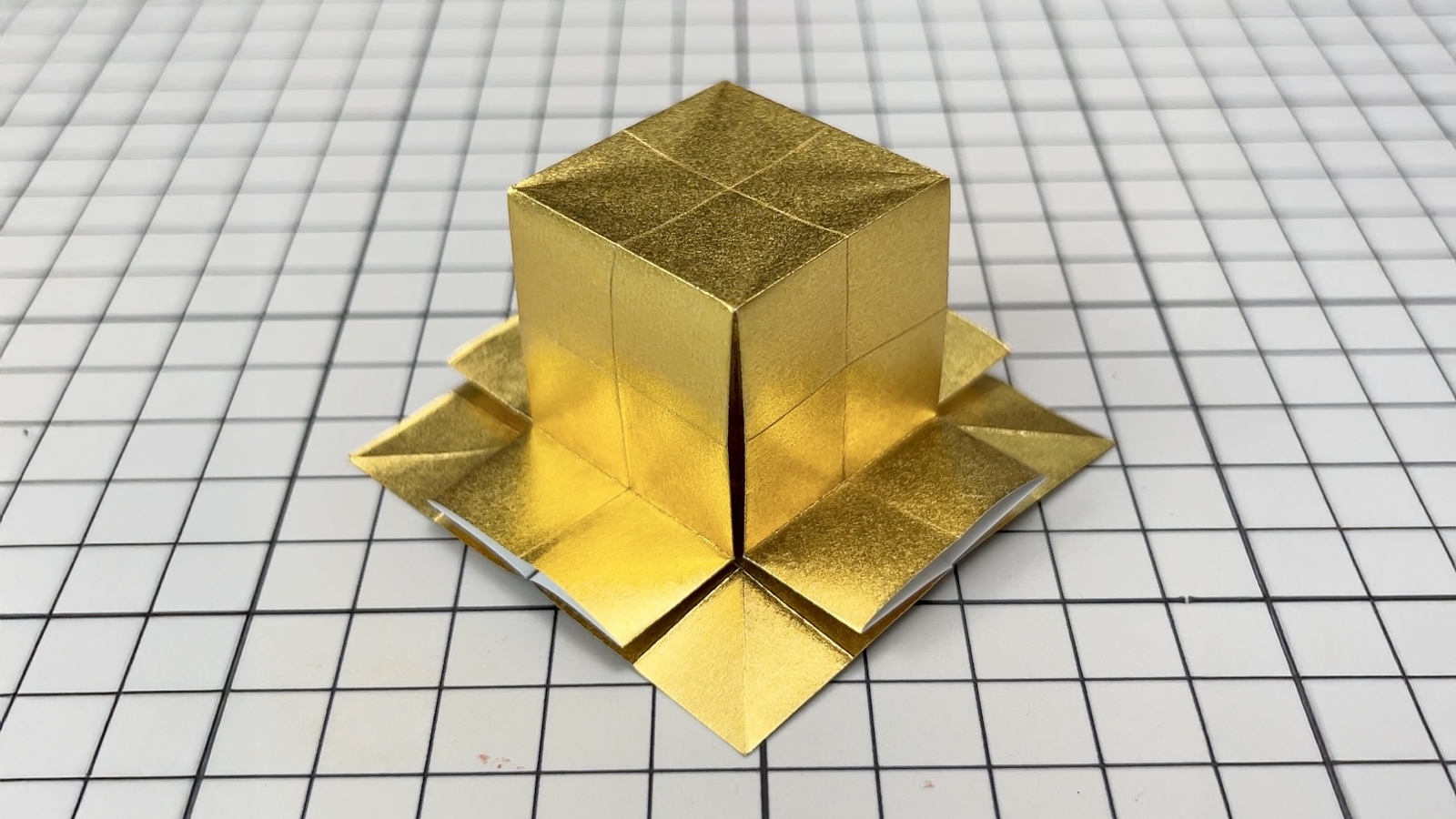
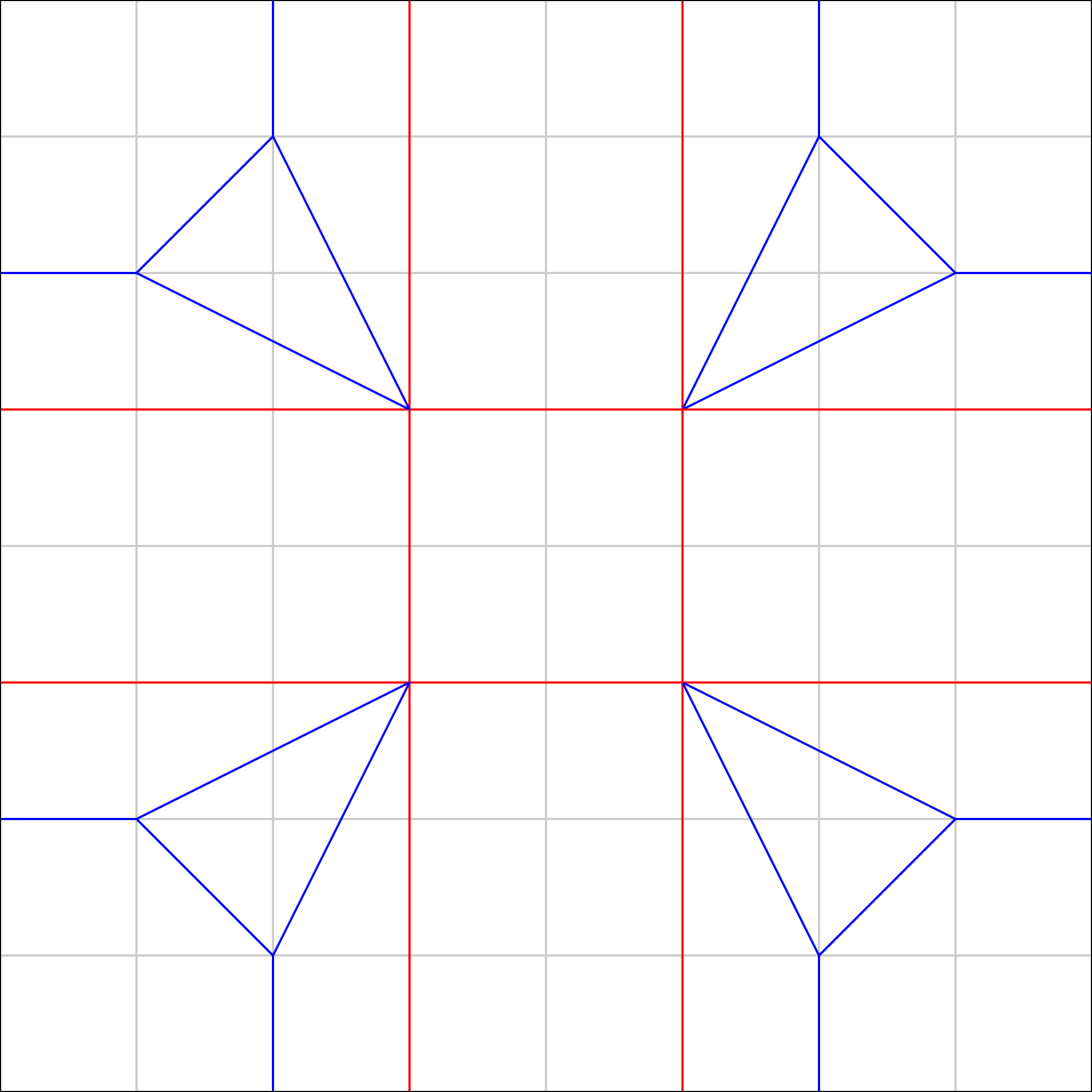
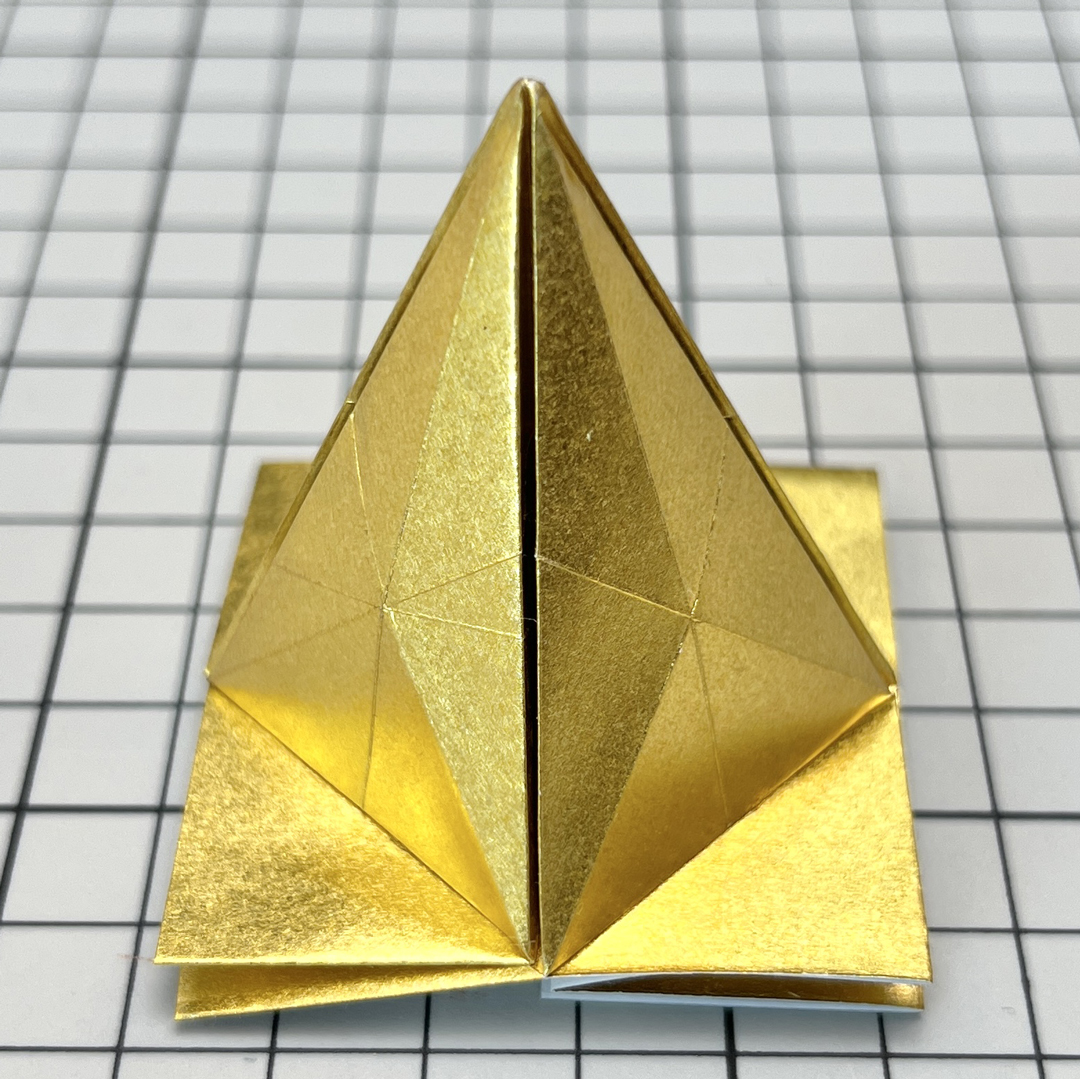
Composite Square Pyramid
A square pyramid with a sharply pointed apex. It can be constructed by combining four triangular pyramid units using a twisting fold. A frame-like structure forms inside the shape, giving it high structural strength.
In this way, the acute triangular pyramid can function as the framework of a solid form.
Its ability to bridge organic horn shapes and inorganic geometric solids is one of its greatest strengths.
Examples in Actual Works
The acute triangular pyramid can be incorporated into virtually any motif that includes horns or protrusions. In past works, they have been used in the horn structures of deer, cattle skulls, and Hannya masks.
Deer

- The volumetric corner structure is used partway along the antlers to add mass and dimensional presence.

Deer Bust
A three-dimensional deer bust made from a single square sheet. The volume of the fur is expressed by densely folding the paper into complex layers using a technique called Miura-ori.
Cattle Skull
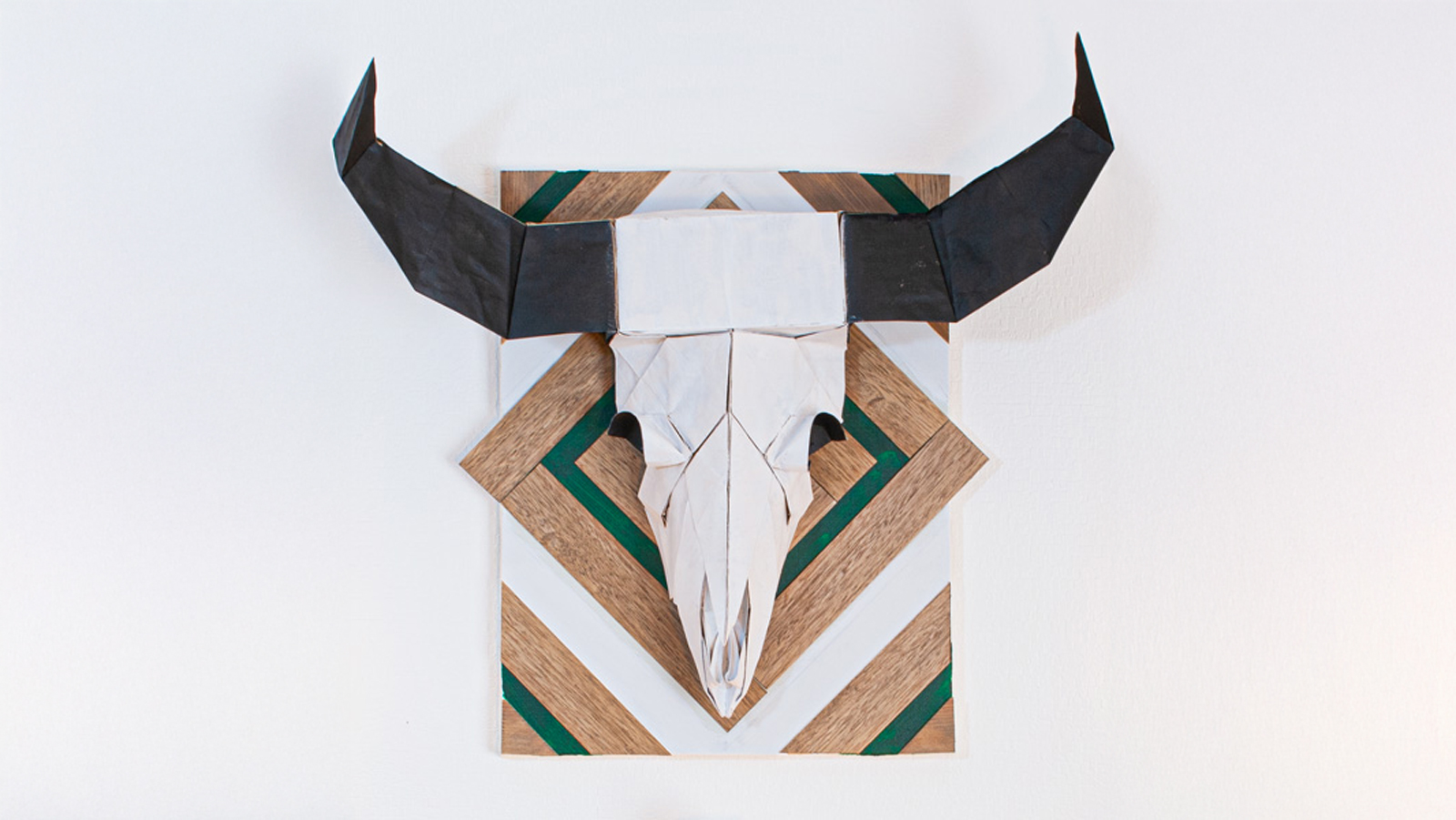
- The structure is employed to express horns with both strong volume and a sense of weight.
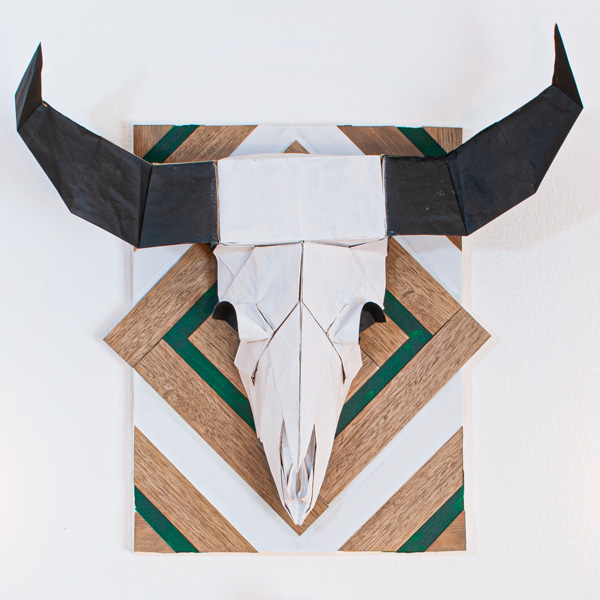
Cow Skull
A three-dimensional cow skull with the horn and eye colors altered through an inside-out design.
Hannya Mask
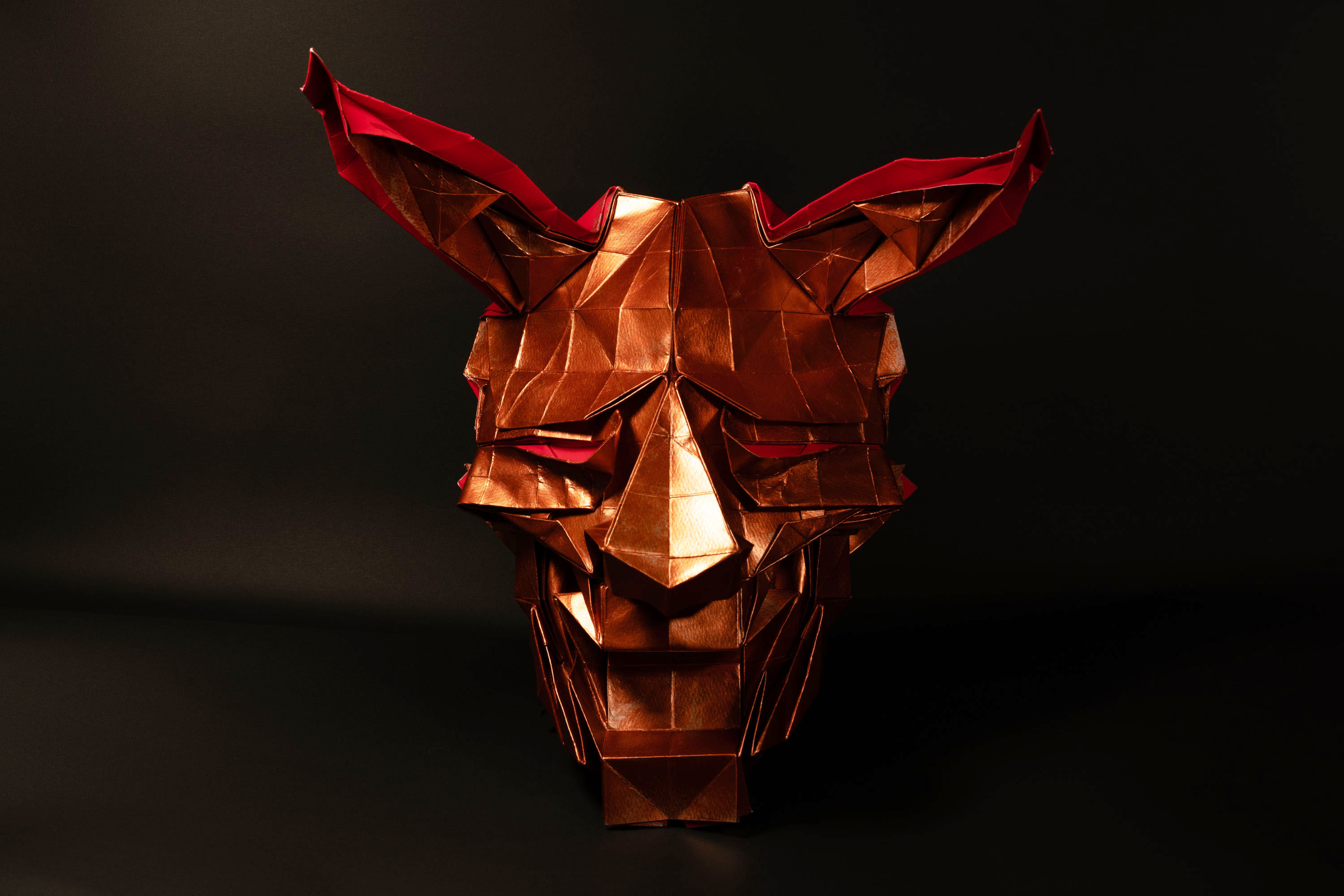
- Repeated use of the volumetric corner structure creates horns that are both sharply defined and strongly three-dimensional.

Hannya Mask
A three-dimensional Hannya mask constructed by combining polygon components. The eyes are expressed with an inside-out structure.
Three Types of Corner Structures in Origami
Here, we categorize origami corners based on where they are folded from.
Internal Corner
- A corner folded from the interior of the paper
- Requires a full 360-degree region
- Tends to become thick
While it is easy to generate volume, this structure is not well suited for long, slender, pointed tips.
Edge Corner
- A corner folded from the edge of the paper
- Uses a 180-degree region
- Thinner than an internal corner, thicker than a corner-kado
This structure is well suited for creating band-like corners with consistent thickness from base to tip.
Corner-Kado
- A corner folded from the vertex of the paper
- Uses only a 90-degree region
- The thinnest of the three, with a natural taper
This makes it ideal for horns, fangs, and sharp protrusions.
The Acute Triangular Pyramid as a Fundamental Structure
The acute triangular pyramid is defined by the following characteristics:
- It uses the vertex of the paper
- It is highly efficient in paper usage
- It naturally produces tapered forms
- It supports repetition, three-dimensionalization, and geometric expansion
When designing horns or protrusions as structures rather than surface details, this structure becomes an exceptionally powerful option.
The next time you fold a motif with horns or spikes, try consciously considering which type of corner the form is folded from, and explore how the acute triangular pyramid can guide your design.